Understanding Belbin Team Roles

Dr. Meredith Belbin, derived the concept of distinct 9 team roles. The teams roles were derived as a result of studying teams who were competing with each other on table top business centred scenarios. The study involved teams that were successful and the make up of the team members in such teams when given a challenge centred on a business setting. Uniquely useful, this tool evaluates behavioral preferences at the work place as suppose to innate personality of an individual. Moreover this tool also incorporates a 360 degrees overview, where 4 colleagues can provide their perspectives of the individual and their scores are per-mutated with the self perception scoring done by the individual. A robust instrument that factors in your colleague’s overview if you choose to do so. The Belbin instrument administered on line can also cater to individual’s scoring only. 9 roles are described and they are as follows;

Belbin Team Roles

Plant

Plants are creative, unorthodox and a generator of ideas. If an innovative solution to a problem is needed, a Plant is a good person to ask. A good plant will be bright and free-thinking. Plants can tend to ignore incidentals and refrain from getting bogged down in detail.

Resource Investigator
The Resource Investigator gives a team a rush of enthusiasm at the start of the project by vigorously pursuing contacts and opportunities. He or she is focused outside the team, and has a finger firmly on the pulse of the outside world. Where a Plant creates new ideas, a Resource Investigator will quite happily steal them from other companies or people.

Coordinator
A Coordinator often becomes the default chairperson of a team, stepping back to see the big picture. Coordinators are confident, stable and mature and because they recognize abilities in others, they are very good at delegating tasks to the right person for the job. The Coordinator clarifies decisions, helping everyone else focus on their tasks.

Shaper
The shaper is a task-focused leader who abounds in nervous energy, who has a high motivation to achieve and for whom winning is the name of the game. The shaper is committed to achieving ends and will ‘shape’ others into achieving the aims of the team. He or she will challenge, argue or disagree and will display aggression in the pursuit of goal achievement. Two or three shapers in a group, according to Belbin, can lead to conflict, aggravation and in-fighting.

Monitor Evaluator
Monitor Evaluators are fair and logical observers and judges of what is going on. Because they are good at detaching themselves from bias, they are often the ones to see all available options with the greatest clarity. They take everything into account, and by moving slowly and analytically, will almost always come to the right decision.

Teamworker
A Teamworker is the greasy oil between the cogs that keeps the machine that is the team running. They are good listeners and diplomats, talented at smoothing over conflicts and helping parties understand each other without becoming confrontational. The beneficial effect of a Teamworker is often not noticed until they are absent.

Implementer
The Implementer takes what the other roles have suggested or asked, and turns their ideas into positive action. They are efficient and self-disciplined, and can always be relied on to deliver on time. They are motivated by their loyalty to the team or company, which means that they will often take on jobs everyone else avoids or dislikes.

Completer Finisher
The Completer Finisher is a perfectionist and will often go the extra mile to make sure everything is “just right,” and the things he or she delivers can be trusted to have been double-checked and then checked again. The Completer Finisher has a strong inward sense of the need for accuracy, rarely needing any encouragement from others because that individual’s own high standards are what he or she tries to live up to.

Specialist
Specialists are passionate about learning in their own particular field. As a result, they will have the greatest depth of knowledge, and enjoy imparting it to others. They are constantly improving their wisdom. If there is anything they do not know the answer to, they will happily go and find it. Specialists bring a high level of concentration, ability, and skill in their discipline to the team.

The assessment for using Belbin can be done the following ways, specifically, using the online portal, for which we will provide our clients with the password to access.

  • Self assessment ( by the individual only)
  • Team assessment, by the individual’s mentor, co-worker, supervisor or a former team member.

The assessment culminates with a detailed report that we will provide to you. A comprehensive report that is centred on your behavioural preferences at work, detailing both your strengths, allowable weakness, and your working style. Our training programs are designed in such a way that we will use experiential activities to detail the salient points that are described on the report. We have designed our very own Belbin Team card that we have used successfully with senior officers from both the MNC’s and government agencies in Singapore. Do contact us at +65 63152587, if you would like to engage a Belbin certified facilitator for your organization.

Share

Energizers that works – Squirrel

You have your learners in place in the seminar room. You have with you 20 or more starry eyed learners looking at you and you step forward to introduce yourself to start the training session. Your Generation Y learners are starring you down and they occasionally toggle with their smart phones too. You are turning back with nervousness to glimpse the learning outcomes you have wriiten down in the power point and from the corner of your eye you see one participant yawning. It was a loud yawn and it is taking a contagion effect on you too as others start to look down on their notes and wait in line to get in to the world of sheer boredom and sleep. Don’t despair you can do something about it and yes that is why we use energizers to get people up and about and get excited about what you as a facilitator is waiting to present.

An energizer activity is also known as an icebreaker. Hence in this instance, using an appropriate energizer will help in facilitating your class. It creates energy, activity and focus. In this blog I would like to share with you an energizer activity that will excite all your participants, be it adults or students. It will create movement, laughter, excitement and most importantly it will be fun. I first documented this activity learning the nuances and rules from a group of kids when I worked as an Assistant Lecturer at National Community Leadership Training Institute. That was 20 years ago. Here is a video clip of this activity that we have created for you. View the clip and we will also share with you the simple notes on how you can do the same with your training program and yes, you dun need to feel nervous this time round.


Squirrel -Energizer

Activity : Squirrel

Participants: Indoors and outdoors, from 20 -100

Activity instructions:

- Get all the participants to team up into groups of 3 people to a Team (Forming Triads) …. you will get many groups of 3s

- Get two people in each team to extend their hands outwards and hold each others hands, as you have seen in the clip. This pair is known as the “trees

- Position the third person between this two and he becomes the “squirrel”. The simple adage, the squirrel found in the trees.

- If you have 2 or 1 person left over and are not able to form this group of 3, it is fine cos they will be the ones shouting out the commands.

- When the command “Hunter” is shouted, the squirrels must move out of their trees move to another tree. As the command is shouted out, the folks who shouted the command will compete for a space amongst the trees, hence you will have a situation where 2 more people are caught without a place to go and they can shout out the command again

- When the command “Fire” is shouted, the “trees” must move out of their spot and move to another squirrel. The “squirrels” must stay where they are when this happens. As the command is shouted out, the folks who shouted the command will compete for a space amongst the squirrels, hence you will have a situation where 2 more people are caught without a place to go and they can shout out the next command and so forth. Comprehende!!

- When the command “Earthquake” is shouted, the “trees” and “squirrels” must move out of their spot. This where you have a complete pandemonium, where a “tree” can become a “squirrel” and vice versa. Hey it is an ice breaker, so go easy on the rules, you need not be strict with it.

There you are, you have both a video clip and instructions to guide you, so do forward it to your friends and share it on facebook if you want to. Contact us if you need any help with this activity and we will guide you too.

Share

Coach Wooden – Lessons for Personal Excellence

Here is an extraordinary overview of one the best educators you can ever find or even read about. Coach Wooden, whose philosophy towards life holds huge lessons for all of us, more so if you are an educator, parent or a leader leading your corporate teams for one simple purpose – Performing to do your very best. Coach John Wooden was described as an uncommon man. He was a legendary teacher of basketball who wanted to be at best, a literature teacher. He coached basketball at UCLA and is the architect of the greatest championship record in all sports. This is the record he held, 7 national championships in a row, 88 consecutive victories, and list will go on. He was an extraordinary educator who lived a principled life centred on values and he taught the same to his team of basketball players. In the 60′s when racial bigotry was common, the lakers famed player Kareem Abdul Jabbar chose to study in UCLA so that he could play for Coach Wooden. In 1947, this was the same man who broke the colour barrier when he refused a berth in the NAIA basketball tournament, a prominent college play off events; when one of his reserve players Clarence Walker (African American) was not allowed to play. Such was his moral courage to stand by his principles. He turned down the invitation again for  the 2nd year until NAIA officials changed their racial policy in the 3rd year.

I am writing this blog to share with you the simple but immensely impactful lessons that we can adopt as educators, parents and leaders in our chosen field. His lessons to us includes our ethical behaviour and attitude;

“Be more concerned with you character than with your reputation. Character is what you really are. Reputation is what people say you are. Character is more important” John Wooden.

John Wooden’s leadership was character based, his philosophy was centred not on talk and quotes but this man simply lived the values he preached like his father. He spoke about the compass, staying true north and even when a compass is cracked, with solid values it still points true north. It is not about a rank you hold, you can be a Lieutenant  Colonel and by virtue of your actions you are ethically and morally flawed when you take short cuts in life. Character leadership is not dictated by the rank or the designation you hold. We all know that.

For all coaches and educators you may want to train your charges by these simple rules that Coach Wooden lived by. He learnt these rules from his father and he expects the same from himself and his players. Coach Wooden describes his father as one who came close to living these rules;

Dad’s 2 sets of 3s

Coach Wooden’s dad taught him as a child to live his life by the following 2 sets of rules. The first set gave instructions on integrity;

a. Never lie

b. Never cheat 

c. Never Steal

The above rule is the very same rule I teach my kids and I will share how succumbing to short cuts in life can derail you big time. As an adjunct educator I assess individuals from all walks of life at an education centre that teaches modular subjects. On one occasion, I failed a Lieutenant  Colonel for the very act of plagiarism. Imagine this, this individual even had the audacity to stare me down in the assessment room and did everything he could in the book to lodge a complaint against me. He exercised his right for appeal and once again he was failed by a panel of 3 assessors 2 weeks thereafter.  Take a peek at the officers undertaking the 6 months Navy seals BUD/S training program and one critical aspect of officers wanting to make it through the 6 months Seals program is the ability to endure better then the rest of the trainees and moral leadership. The rank on your shoulders do not equate you with respect for any fool can call you “Sir” or “Madam”. The same fool called me “sir” when he sat down to be assessed.

Here is the 2nd set of 3 from Coach Wooden or how to face adversity;

a. Don’t whine

b. Don’t complain

c. Don’t make excuses

I like this one a lot and in my home with 2 kids and one on the way, I will not accept any complains from my children. Likewise even with my practice as an underdog, being treated unfairly sometimes, I see no reason to complain, except to bite my teeth grow a few more white hairs and just push on with what I do best with Teamwork Bound. Coach Wooden was one solid educator who never yelled at his players and in 1934, he wrote down his definition of success…. it is not the straight As you get, it is not the big car you drive, it is not the reputation you weave or the rank you have on your shoulders but rather “Success is the peace of mind that is the direct result of self satisfaction in knowing you made the effort to become the best that you are capable of becoming.” Dear coaches it does not matter if they don’t podium finish, encourage your kids to go past where they were previously.

You don’t need luck for PSLE, a race or whatever you choose to do, you just need a simple magical pill called “hard work” laced with integrity and 2 sets of 3, my son. It is sold deep down in your gut when the going gets tough.

References;

John Wooden, (2009), Coach Wooden’s Leadership Game Plan for Success, McGraw-Hill Cmpanies

Share

Flight of Geese – 5 Management Lessons

One of the key things I do is conducting corporate team building training program for my corporate clients. Even with senior management teams, one inherent key request I get all the time is a need to get their teams to come together. Any management team can come together as a group. It takes lots more to be a functional effective team. One key lesson I use all the time is the use of the Geese metaphor how we can learn simplistically looking at how geese flies and the lesson inherent in their flight in “V” formation.

Lesson 1: As each goose flaps its wings, it creates an uplift for the other birds that follows, hence it becomes smarter for all the birds to fly in a group. Interestingly if you ever spot them flying, they fly in a “V”. Amazingly for these birds, the lift and the aerodynamics of flying in “V” formation adds 71% greater flying range had each bird flown alone. Management tip #1, do share your expertise with your team, you will be amazed when pieced in place they become collectively powerful.

 Panasonic – Team

Lesson 2: The birds will stay in formation with their leaders and each goose is willing give help and accept help too. When the lead Goose tires, another bird will seamlessly take its place, carrying on with the journey. Management tip #2, it pays to take leadership responsibility, as the journey is a common cause for all of you.

Lesson 3: When a geese falls out of formation, it looses speed, feels the drag and resistance of flying alone. It quickly gets back in formation to get the airlift to continue flying at the same speed. Management tip # 3, when you work in your corporate teams, tow the line and work for the cause you been employed for.

Changi Hospital

Lesson 4: Imagine seeing the geese flying in formation, they will honk to encourage those in front to keep up their speed. This excites the birds as the distance wanes, everyone is encouraging each other to keep up the pace. Management tip #4, honk, be encouraging, the power of encouragement is immensely useful in your corporate teams. Encourage with functional words and adjectives, give a pat on the back as you take on key challenges in your department.

Lesson 5: This is by far, is the most eventful lesson that we can learn from these birds. When a goose gets sick, wounded or has fallen back from the group and the formation; 2 geese drops out of the formation to follow it down to help and protect it. They stay with the injured goose until it dies or is able to fly again. When it is recovered they fly out again in a small “V” to catch up with the flock. Management tip#5, I have seen so much hurtful behaviours where individuals thrive on the rat race, we fail to become kind or thoughtful. Lend a hand to your colleagues and stand by each other even through the difficult times.

Team building programs that we conduct accentuates such functional behaviours. It is my wish that teams do well and more importantly as Teams succeed so does the organization, that is our mantra and that is what we do in Teamwork Bound.

Share

Kindle – The joy for reading

My role as a facilitator requires me to read a lot. In fact, my appetite for reading is usually centred on reading research papers, and on topics that catered to my craft as an experiential learning educator. On my last trip to India, I ended up with a luggage full of books that I bought in Chennai; for some strange reason the books were so much cheaper there, then what it costs in Singapore. Month after month, my library grew, for some books were so good they supplemented by research on Team dynamics and performance. Here are the books that I have read and some I intend to read;

My reading list

The books I bought became my companion until I found the Amazon Kindle. The Kindle was a joy as my reading habits increased  voraciously. I bought my kindle last year in October and it has been a year now. I have started to read my ebooks with unquenchable appetite. Even when I drive, I had it by my side, reading a paragraph or two at the traffic light stops. I loved it. It became my friend that I cannot do without; at meetings when we had to wait or standing in line waiting to be served. More often then not, folks who see me with the kindle became curious and then surprised when I showed them my Kindle, letting them fiddle with it. For the folks who live in Singapore, their common gripe;” hey I heard we are not able to buy books with the Kindle and there is a need to buy vouchers, to purchase books and of course the Kindle too, that you cannot get with the Singapore Amazon account”. Well to all of you who asked me how I have done it, this blog is for you if you intend to purchase your Kindle and use it Singapore.

The Amazon Kindle

Here’s a no brainer, you will need an Amazon account. You can get one with a valid credit card number and all the nuances that goes with it. If you already have an Amazon account, you will be required to update a second address. Specifically a US address if you want to buy a kindle or a kindle ebook.  You can get a US postal address from the Singapore’ vpost, here is the link to register yourself. That is all you need to do and you are on your way to hours of reading that will make the walk to the library a chore.

You can download both free ebooks and ebooks at prices that is 20% below what it is worth in hard cover and you can do it with just one click. If you intend to purchase a Kindle, get the one with the wireless features cos the 3G version will not work here. You need to get the Kindle delivered to the Vpost US address who will then deliver it to you here in Singapore. Imagine the trees that you will be saving. Technical support for your Kindle is a plus and all you need to do is to just skype to sort out the technicalities if you have any.

That is how I have read my books and the collection of my ebooks is growing month to month. Unlike the IPAD, I only charge my Kindle once a month. You can read about Kindle features on the Amazon website and even in the outdoors, I don’t squint to read my ebooks ;}

Share

Strategy Planning – Crafting your vision and mission

Program Title: Strategy Planning – Crafting your vision and mission

Target Group: Senior Managers, Project Team, and Executive Team members

Program objectives: Principles and values are the bedrock of how we relate to different circumstances and trials we face day to day. Likewise the vision and mission statement that will provide a direction to all employees who come with varied backgrounds and skill sets. We have assisted organizations to develop and craft vision and mission statement centred on their core business, expectations of the customers and alignment with the business goals. We will;

  • Get employees managers and stakeholders, involved in envisioning and developing a vision that is aligned with the business that you do
  • Build shared values and common beliefs among all levels of your organization
  • Provide a conduit through the use of carefully designed experiential and facilitative activities to better communicate, the organizations critical roles to customers
  • Gain the manager’s and employee’s participation, insights and commitment to quality and service
  • Craft a well thought out vision and mission  statement by facilitating the process

Group size: 40 participants

Duration: 2 days

Methodology - Why is our approach different? We incorporate a methodology that will use experiential activities, supported by facilitation techniques that includes use of graphic facilitation, group facilitation by peers and building of consensus. Shared with the learners are short impactful case studies that will include organization’s such as Google, Apple, National Library Board and 3M as a scaffold for learners to understand and invoke their inner passion to achieve a long term visionary and mission goals. Do get in touch with us and we can share with you the detailed program synopsis and the work we did in crafting the vision and mission statement.

Apply what you learn

Participant’s comment: What you will be reading below are the comments from our learners who attended this 2 days retreat. We kept the evaluation anonymous and we got back a rich overview of their views.

- “The discussion and games help us have a better understanding of our objectives. The tailoring of this retreat helps us form the vision and mission statement”

- “Help me to go with the vision/mission statement of the department and to be open to changes along the way to achieve the goal. It has been an impactful time during the retreat, where I bring back, with me practical knowledge”

- “Facilitator has effectively guided us through in our mission to develop our mission and vision statement”

- “It has been a very interesting workshop/ retreat. Very challenging. Thanks to Mr. Ebnu and facilitators and his team. I have enjoyed myself very much. I have leant many strategies which were useful for me to plan my goals. Thank you, Ebnu and Team”

This 2 days retreat that we faciltated for a Government agency was rated very highly by the learners too.

We can do this for you too. Do contact us at office@teamworkbound.com or call us at +65 6315 2587.

Share

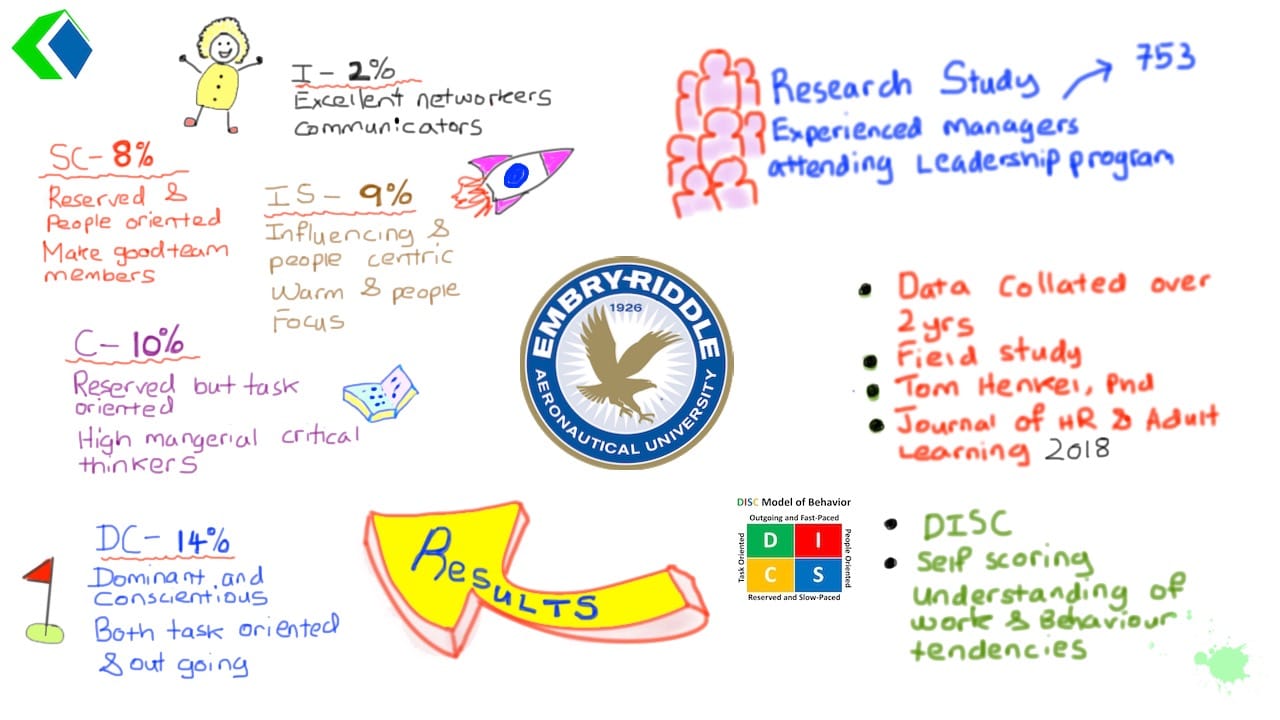
Building Teams with D.I.S.C

Program Title: Building Teams with DISC

Target Group: Senior Managers, Project Team, and Executive Team members

Program objectives: This program is your guide towards understanding why people do what they do. Personality styles are the language of observable behaviours that you are able to see in your working teams. Using the DISC personality analysis system, each participant will be given a comprehensive overview and report on how they react to their working environment and their colleagues at work. Our program utilizes the use of dynamic experiential activities  that will be facilitated for learners to not only understand themselves but also their colleagues. You will;

  • Discover your personality profiles described in DISC
  • Comprehend the 4 different primary roles described in DISC
  • Understanding of  your strengths and weaknesses detailed in the report
  • Interpret your profiles and understand the varied personality styles of your colleagues
  • Understand and value how differences can help in creating a dynamic team
  • Create strategies to improve relationships at work

Group size: 25 participants

Duration: 1 day

Through the use of dynamic team building activities that we are able to conduct in the outdoors and indoors, you will learn principles of how individuals respond to their environment centred on their personality. You will gain greater sensitivity towards your team members. This includes understanding of the core behavioural traits described in DISC;

Dominant – Do you know some one who works with you who is assertive, to the point and manages the bottom line? They are drivers and risk takers.

Influencing – Do you have friends who are great communicators, and genuinely friendly to everyone they meet? They are influencing who weigh in people and relationships highly.

Steadiness – Ever worked with folks who are great team players and they listen very well too? Described as Steady, they are patient, loyal and practical.

Compliance – Have you worked with someone who enjoys getting facts and details? They are described as Compliant, and they are precise, sensitive and analytical.

Our program on Building Teams using DISC has been highly evaluated. Detailed below are comments from our participants on their learning experience with us;

“the objectives of every game, reflection time and debriefing sessions are 3 aspects of the course that were useful. Excellent course to know each other from the different departments, Sandy Tok,  Singapore Civil Service

” The facilitators were brilliant! The objectives of the course were met and the course is impatfull” Omar, Singapore Civil Service

“Some of the points indeed hit a spot for me” Naizal, Singapore Civil Service

Share

Program: Belbin Team roles

Program Title: Belbin Team roles

Target Group: Senior Managers, Project Team, Executive Team, coming together

Program objectives: Participants in this program will have an overview and understanding of the theoretical underpinnings of the researched based behavioural centred qualification tool Belbin. Participants will use the patented online Belbin Team portal to complete their profiles and they will be provided with a detailed report that can include a 360 overview on one’s behavioural preferences at work. You will;

  • Discover your tendencies and behaviours preferred in your work environment
  • Understanding of the 9 roles researched and defined by Dr. Meredith Belbin
  • Understanding of  your strengths and weaknesses detailed in the report
  • An overview in the 360 report on how you are viewed by your colleagues at work
  • Application of the roles described in Belbin through experiential activities detailing work performance
  • Application of ownership and taking responsibility  whilst working in teams

Group size: 25 to 40 participants

Reports that will detail

1. Individual Reports without observer assessments

2. Processing Self perception inventory and up to 6 observer assessment

- Team role profiling report

- Counseling report

- Personal work style report

- Pie chart of self and observer assessments

- Assessment results in ranked order

- Bar graph of observer assessments

- List of observer assessments

3. Working relationship reports

4. Team reports

HIgh performing teams do not come together by chance. The Belbin Team roles is one definitive tool that has been used by MNCs and Senior officers from uniform groups. Unlike other conventional profiling tools, the unique report evaluates the behavioural preference not personality. Moreover, research has shown all 9 roles described by Belbin are critical roles required in a Team based environment mandated for organizational performance. As an accredited consultant for Belbin Team roles we stand as one of the very few consulting companies based in Asia Pacific who can deliver this program for you. This includes use of the patented Belbin online portal with an option for you to include a 360 degrees overview of your behavioural preferences at work by your colleagues. We are accredited and trained to administer Belbin. Our past participant’s testimonial below details what we did with their senior managers and engineers. Read on here to find our more about Belbin Team roles.

Participant comment ;

This is Nirmal Menon (Project Engineer from CB&I Lummus Pte. Ltd.)
First of all let me take this opportunity to thank you for those wonderful interactive two days, the two days which I shall always remember. Let me tell you that I have attended team building sessions in my previous organizations but that was confined to 4 walls of a conference room with much of inspirational speeches by any successful corporate guy, but in the sessions which we (including my team members) had with you is one of its kind which is a first time experience for me.  You made us interact, you made us think as a team, you made us come to a consensus, you made us realize that whats the difference between thinking as an individual and thinking as a team. The team tasks which were given to perform were unique particularly “TREASURE HUNT” exercise – That was AWESOME.  That really made us work as a team and that bought a thought of unity in our team, we started caring for each other during the course of exercise, we ensured that everyone stayed together with the team and did not loose track. That exercise also made us plan activity which can be done parallel along with another activity. Let me tell you its been two years I am in Singapore and 25-Feb-2011 was the day I have enjoyed the most in Singapore thanks to you!!!.
Share

Pushing past your very best

Every saturday afternoon at Punggol Park, my son embarks on a training program with Coach KK from Team Sapphire. The training sessions are usually tough and it gets tougher on the parents when they see their children competing with one another in training. Usually it could be a run, a bike session or an open water swim session that will include all 3 disciplines.

On one such session, as a father I failed my son as he suffered in a training session with 3 other kids last week. The sms I got from coach KK, reminding me that the kids will be having a tri session was a message I did not take too seriously. I was more concerned about his Maths and my work. I told Musaib that it will be a Tri session and left it to him to organize himself. We rushed for tri training that day. Coach KK from Team sapphire, briefed the 3 girls and Musaib, that they will be doing the swim first. It dawned upon me that I failed to check what he packed. He didn’t have his goggles with him. I failed to bring the goggles that he needed and he did not show an ounce of anger against me for that. He swam 2 laps as a warm up and 3 more without the goggles. My conscience was pricking me cos he was swimming with his head above water. I asked him if his eyes were OK and he just replied “its OK , it was OK” and went on to his kids’s mountain bike he will be riding. He struggled on the ride as all 3 kids out rode him and he finished the ride with leg cramps, whilst trailing from behind. He had tears in his eyes and stopped at the transition area to stretch, knowing very well the 3 kids have left before him. Coach KK, told him to stretch and to just push himself irrespective of who could be in front. He ran the distance on a hob and run finishing in quick pace though he was at the back of the pack.

My heart sank to see my 12 year old son suffer like this and in a desperate bid to exonerate myself, I asked him if he wanted a racing bike like the other kids, for the Tribob Kids Triathlon Race in May. That was the least I could do to just make up to him for not organizing his things for the training session. Musaib said “No”. He said “its OK dad, I will ride the mountain bike”.

Quite frankly I really do not care, at what position he finishes the race and it matters more to me to see him reach the finish line running a race pushing himself past the cramps and doing it safely. He made my day. I have a wonderful son and his name is Muhammed Musaib. My son my champion.

On Sunday afternoon at Changi, Musaib ran and did the open water swim with Team Sapphire and 5 other kids. There were no cramps and Musiab ran like there was no tomorrow after his Bike ride on the same mountain bike and swim in the sea. At Changi, Musiab found his “run”. The video below is dedicated to Joshua, Musaib, Wilfred, Maher, Sowri and Yasmine, 6 wonderful kids who did a mini triathlon on a Sunday afternoon for training. You are all champions in my Book.

Share

Engaging your learners

As a practitioner in developing learning programs, I have found Gagne 9 events helpful in sequencing my learning content for my training programs I have conducted in Singapore and Asia. Application of the 9 events has helped me to engage my learners from the Generation Ys to the adult learner. Lets look at the 9 events and I will share with you the approach I take.Moreover, this theory outline by Robert Gagne details nine instructional events and their corresponding cognitive processes.


Energizer activity conducted

(1) gaining attention (reception)

(2) informing learners of the objective (expectancy)

(3) stimulating recall of prior learning (retrieval)

(4) presenting the stimulus (selective perception)

(5) providing learning guidance (semantic encoding)

(6) eliciting performance (responding)

(7) providing feedback (reinforcement)

(8) assessing performance (retrieval)

(9) enhancing retention and transfer (generalization).

Do consider, how you “ gain reception” on part of the leaners you will be engaging. What I mean here, is for you to consider activity driven exercises that you can incorporate in a classroom or in a hall to gain the buy in of your learners to get excited and interested, to your learning content. Some trainers have labeled ice breakers, and energizers as activity driven exercise to meet event 1 described by Gagne. When conducted without any relevance, it deteriorates into a childish game. Energizers and ice breakers when used appropriately can be powerful attention gainers. Even a field visit can achieve a similar out come.

What I mean here is the field visit initiated by my Lecturer, many years ago, Dr. Ralph Blunden was delivering a lecture on advance learning theory to my class on a Sat morning. Little did he realized that half the class was falling asleep and the other half was just confused as he tried his very best in a monotone lecture to keep us awake. It was a losing battle and it dawned upon him that all the talking that he was doing was not helping us learn one bit. He paused, took a 2 minutes break and he asked all of us if we can commute out to the museum. The bunch who were dosing off were the first to reply. Anything to get them out of class was a temporary reprieve that they embraced. We agreed that we could go to the museum.

In the museum, he carried on with his lecture on advance learning theories. He shared with us the thought processes involvied in drawing a portrait and how some artists even captured the political undertones in the images they drew. That astounded all of us, theoretical knowledge came alive and we learnt.

Gagne Event 1 – Gaining attention

Consider, how you would want to undertake this in the curriculum that you deliver. It will require you to be innovative and it will also require you to plan. In this blog, I would also like to share with you energizers that can you can use.  The key here is to make the activity relevant to the learning outcomes you will cover.

Little Known FACTs (Gain attention activity – mass groups), another of our top ten activities

Purpose: To increase the level of personal disclosure

Participants: Min 10 to maximum any number

Time: 10 – 20 mins

Resources: Index cards or stick on “post its”

Activity conduct:

Ask the participants to write about little known facts about themselves, in the index cards or the “post its”. Collect the cards from one group and call them the “confessors”. The cards that have been collected will be given to the other group and they will told not to look at the contents of the card. This group is called “Interrogators”.

All the interrogators are required to stand up and place the index cards against their fore heads, with the written side showing. Interrogators must follow the rule by not reading the written card.

The action begins, the interrogators are to find the person whose card is shown on their foreheads. They are required to walk the room, ask questions and find the confessor. The confessor must say yes, when approached and asked by an interrogator.

Once the confessor has been tracked down, the interrogator will ask a series of questions, close or open ended until the LKF is found out.Switch roles.

Like us on Face book if you had found this useful. Do drop us an e-mail and we will share with you how this activity can be debriefed.

Share